Fostering Connections Through Belonging Blueprint: Linda Graves’ Student Success Story
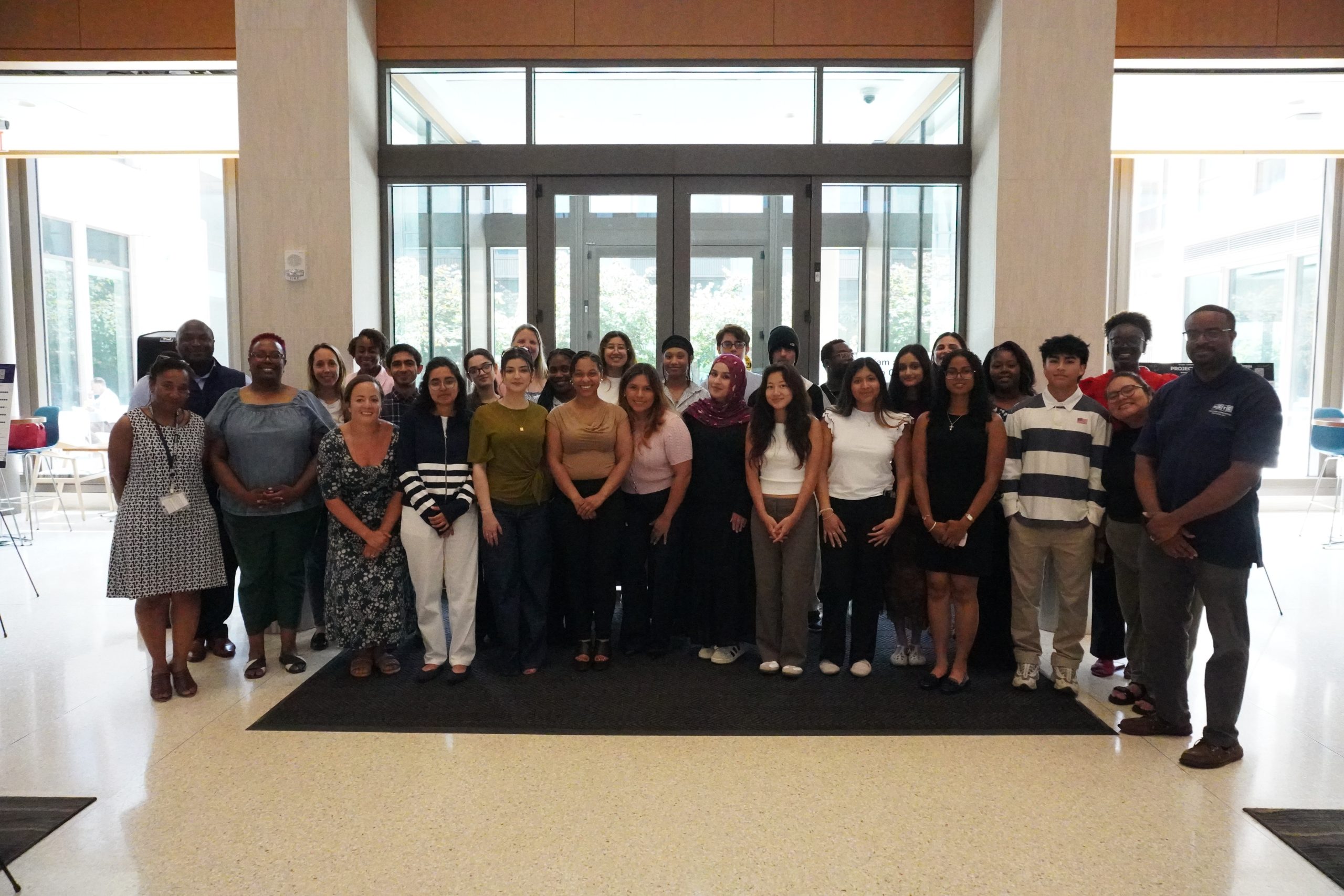
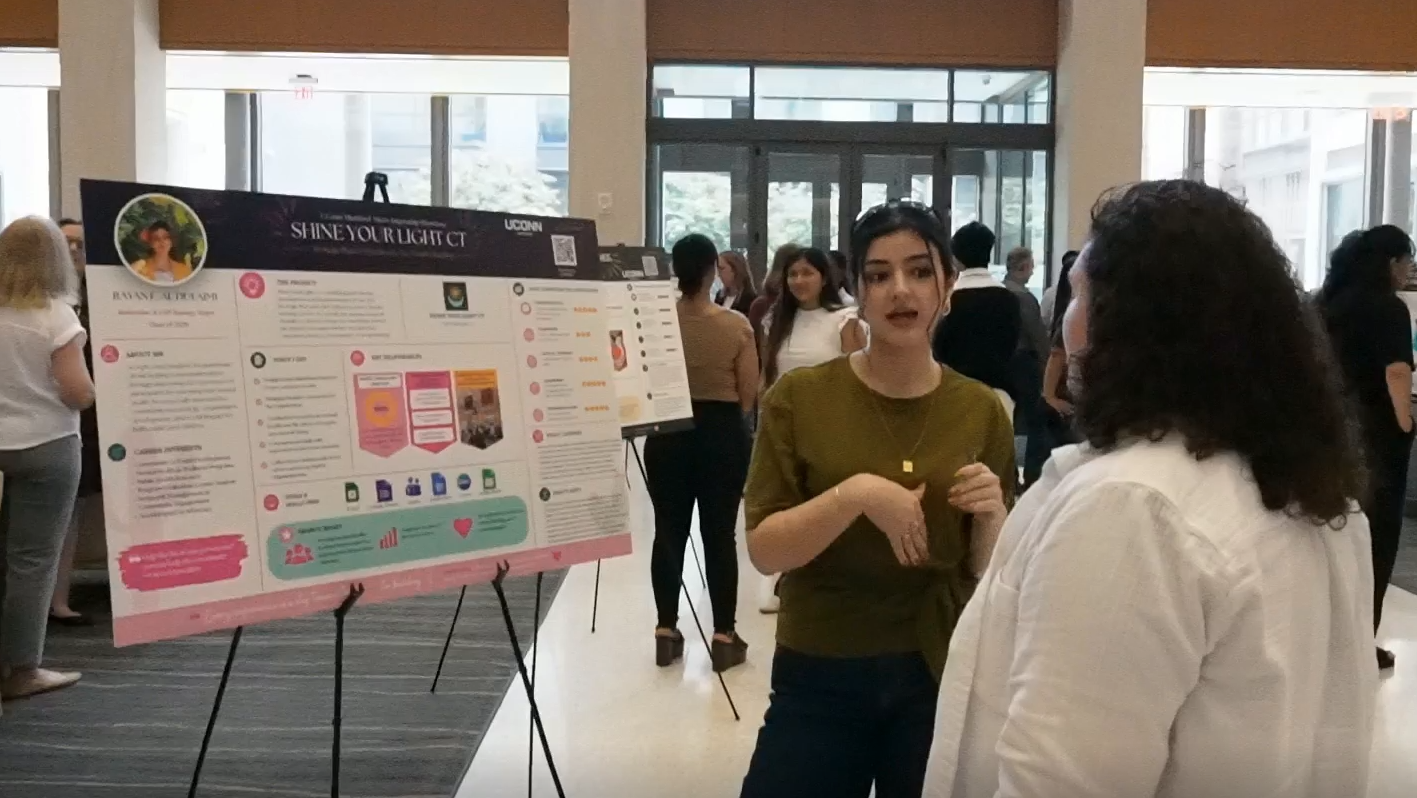
As students, faculty, and community members moved between project displays at the 2026 UConn Hartford micro-internship showcase, Linda Graves ‘27 (SSW) presented her project, titled Belonging Blueptrint, culminating weeks of work with faculty and community organizations about a question that deeply mattered to her: “What makes students and faculty truly feel connected on campus?” While being interviewed about her work, she enthusiastically shared how her passion for helping marginalized communities informed her project description.
Long before starting her micro-internship, Linda was already helping build a sense of community on campus. As an active member of student organizations and government at UConn Hartford, Linda has a unique background of leadership when it comes to engaging with her fellow students and faculty. “I am a community leader on campus, being a president of two clubs as well as a senator on our USG,” she says.
The micro-internship gave Linda the opportunity to explore her interests in social work and communities further. Working with support from the UConn Hartford Engagement and Belonging Committee, Linda set out on gathering research on how college campuses foster a sense of connection and empowerment to students, staff, and faculty. She then began gathering feedback from individuals on UConn Hartford’s campus to create a blueprint to highlight successful community-building features and traditions on campus.
Linda says the program helped her gain a better understanding of student community and wellness resources. “The research that I did, as well as the data aggregation that I did, will benefit students. That way, they know what resources they have available to them on campus.”
Linda is thankful for the support she received from both the Center for Career Readiness and Development, as well as her project supervisor, who helped her build connections throughout the experience. “In this program, I think the biggest support system that you can have is the career center, as you’re mainly working with them. You also have your supervisor that you’re working with, and this then allows you to make connections with new people.
Linda says that participating in the UConn Hartford micro-internship program confirmed her passions for community and social work, and she plans to continue building her communication and data analysis skills as she pursues a career in correctional/social justice work.
“This experience allowed me to see in real-time the benefits of data-driven research and survey feedback to create welcoming spaces. You can be involved with something that you’re interested in, or something you have an emerging interest in, as well as build the NACE competencies.”
– Linda Graves ’27
Career & Industry Insight Through Hands-On Experience
For many students, the 5-week paid micro-internship serves as a first-time step into professional work. The program offers project-based internships to primarily first and second-year undergraduates, through which students gain hands-on experience and develop skills for professional development. The program is especially suitable for students who may not yet have prior internship experience, or are seeking flexible, short-term options.
Mark Overmyer-Velázquez, Ph.D., UConn Hartford Campus Dean & Chief Administrative Officer, is excited about the career insight the UConn Hartford micro-internship program offers to students. “The program allows students to, in some cases for the first time, learn about different professions that they never would have thought of, and imagine themselves as professionals in those spaces,” he remarks. Mark says he’s also heard from students about how they’re transferring the skills they build in the program into the workplace.
Edward Brown, Managing Director of Strategic Initiatives at Hartford Communities That Care, also recognizes the immense advantage this program offers to students through direct engagement within the greater Hartford community. “By having this program, it allows the exposure for students to learn the culture of the Hartford community,” he says. “Preparation is key. It is about getting in the field and seeing what the company’s culture looks like.”
Initially piloted in Summer 2024, the program is expanding to include Hartford-based nonprofit organizations, small businesses, and municipal partners, strengthening connections between UConn Hartford students and the local community.
A Center of Support for Student Success
The UConn Hartford micro-internship program allows students to not just gain valuable skills and experience throughout the completion of their project but also allows them to build their professional network with the program’s unique support resources.
Joanna Rivera Davis, Director of Success, Equity, and Inclusion at UConn Hartford, emphasized the strong support network built into the micro-internship program. She explained that from the program’s launch, professional support has always been a primary focus. “From the beginning, at the heart of it, we wanted to make sure students had professional development embedded.”
Joanna also says that the program’s support resources have allowed students to build connections with organizations they’d never previously heard of that align with their future career aspirations. “If students are looking for a way to think about what life could look like after graduation, participating in this micro-internship program is going to create an open door for them to build a network of support both on the Hartford campus, in the community, and themselves,” she emphasizes.
Many students also highlighted the benefits of weekly check-ins, which helped them stay on schedule for their project initiatives and strengthened their time management and organization skills.
Short Experience with Lasting Impact: Unique Advantage of Micro-Internships
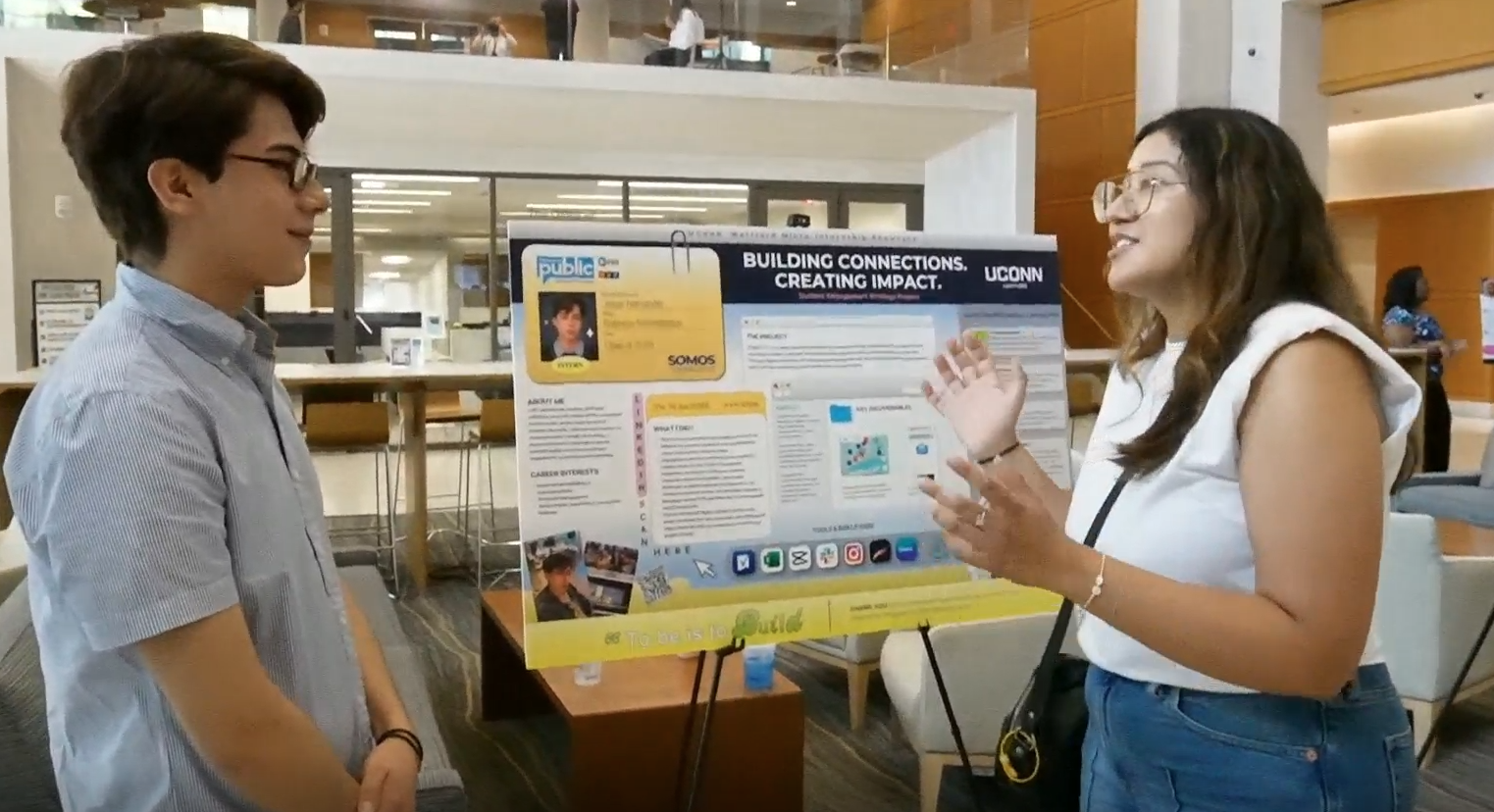
Along with Linda’s work on community connectivity on college campuses, Francis Ntem-Mensah ‘28 dedicated his work to his local youth communities, applying his interests in media and data analysis as a Marketing major. Francis worked alongside Hartford Communities That Care, a nonprofit organization whose goal is to empower youth and create non-violent, drug-free communities in the greater Hartford area. Francis says, “This experience showed me the power of listening to communities to create meaningful change.”
As Francis explains, one of the key advantages of micro-internships is the vast amount of experience, skill development, and network building you can achieve in a short period of time.
“Even though this is called a micro-internship, there is nothing little about it. This was a giant opportunity for me not just to discover myself and help myself in ways I didn’t think I could, but also to help different people in my community.”
– Francis Ntem-Mensah ’28
Astha Natarajan ‘29, a Speech, Language, and Hearing Sciences major, shared similar sentiments as Francis and Linda. Astha is passionate about helping individuals with speech and communication challenges, as well as learning about the anatomy and physiology of speech disorders. To gain professional knowledge about communities in need, Astha met with project contributors of the CT Reentry Project Archive, a group focused on supporting and providing resources for incarcerated individuals preparing to reenter their communities.
Along with Francis, Astha emphasizes that the micro-internship program provided her with the amazing opportunity to develop transferable skills for her future job roles in a short period of time.
“While it is a micro-internship, has a lot of great skills that come with it within a short period of time. It’s amazing to know you will get a lot of transferrable skills, and that in the future, you will get to use those skills for jobs,” Astha says.
Through passion-driven projects and community partnerships, the UConn Hartford micro-internship program is helping students transform their interests into real-world experience. As the program continues to expand its network of community partners and opportunities for industry engagement, more students can have the chance to explore career paths and develop the skills and relationships they will need beyond graduation.
For students like Linda, Francis, Astha, and many of their peers, the experience was more than a 5-week program, but a valuable opportunity to explore their interests and test the impact they could make beyond the classroom. Throughout the future of this program, more students will have the chance to create their own impact on their professional career journey and the communities they serve.


